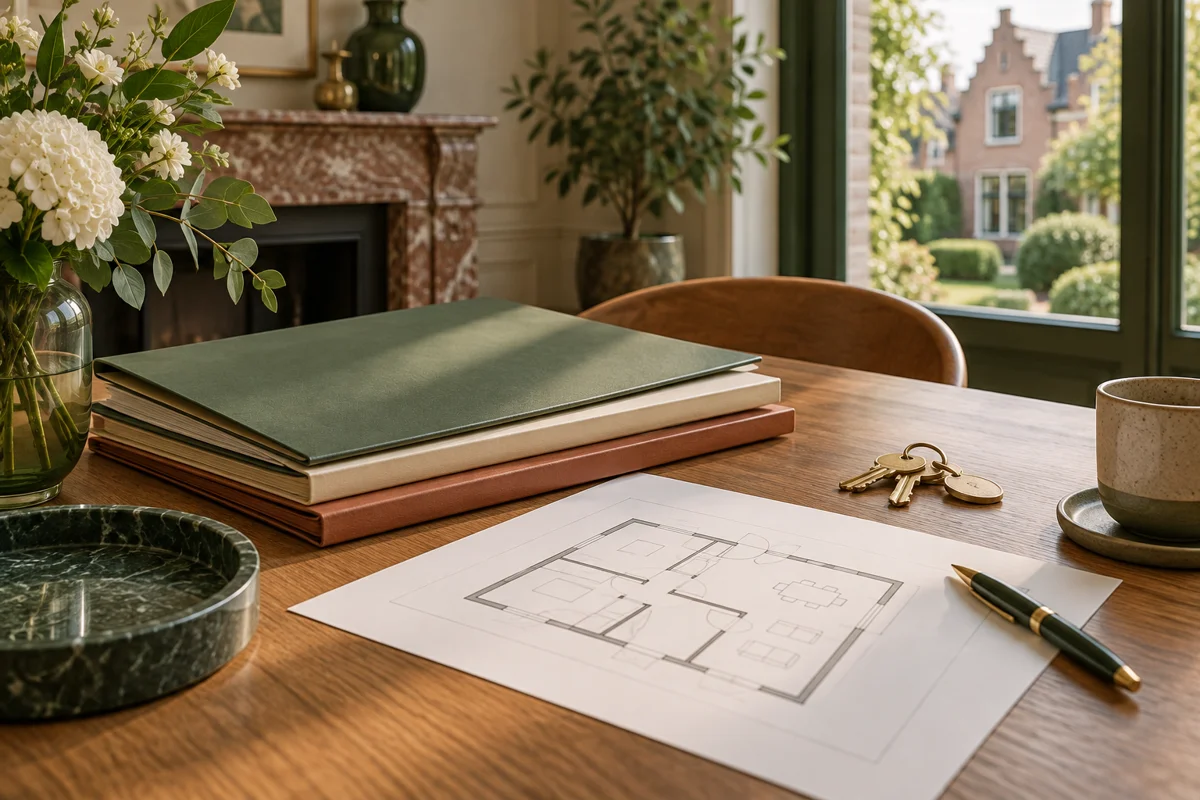
Illustration generated for this guide. It does not represent a property for sale.
Gather what you already have
Create a folder containing available plans, evidence of work, technical information and co-ownership documents where relevant. Give files clear names and retain their dates. Then ask the professional assisting you which documents need obtaining or updating for this property and its region.
Present facts without embellishment
Describe floor areas correctly. Explain work in terms of what it actually covered. If you do not know something, state that it remains to be confirmed. An accurate listing makes viewings more useful and avoids correcting an overly favourable impression halfway through a conversation.
Prepare your next step: Introducing Vendresonbien.be: a service presented as a free way to sell quickly in Belgium
Prepare for recurring questions
Why are you selling? When will the home be available? Which equipment stays? Which expenses are known? Prepare answers consistent with the documents. Before sharing a document, remove personal information unrelated to the sale and check with your adviser what must remain visible.
Open the file before publishing the listing
Gather the documents you already hold and ask the notary for a list suited to the property and region. A house, a flat and an occupied property raise different questions. Record whether each document is available, needs requesting or requires updating. Identify possible delays in obtaining it. This preparation helps you answer buyers calmly and spot differences between documents and the current situation early. It prevents discovering a significant gap just as an offer arrives.
Keep information consistent
Floor area, layout, included equipment, occupancy and availability should be described consistently in the listing and correspondence. If a figure is unconfirmed, state its source or request verification. File evidence of work with its date and scope. An invoice may explain an intervention without certifying the building’s overall condition. For co-owned buildings, anticipate requests to the building manager. Also prepare questions you cannot yet answer so you can direct them to the right person.
Share useful documents methodically
Keep originals and prepare readable copies. Before sharing, check for personal information the recipient does not need, without removing material essential to assessing the property. Avoid folders made up of disordered photographs or identically named files. A short inventory makes reading and follow-up requests easier. Clearly identify new versions when received. Buyer, agent and notary should be able to see which documents are current and which matters still need confirmation.
Sources and references
ComparImmo editorial team. Sources checked on 27 September 2026. Check the rules for the region and your circumstances before making a commitment.