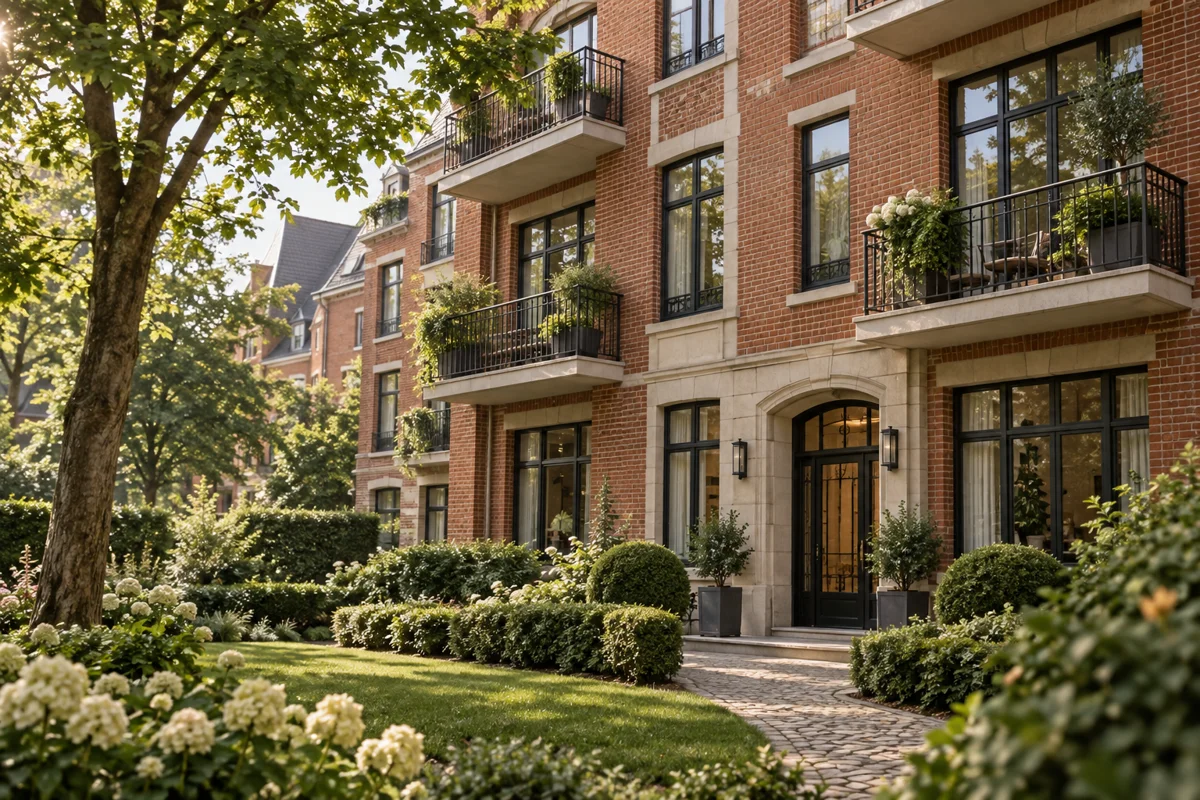
Illustration generated for this guide. It does not represent a property for sale.
Look beyond the flat’s front door
During your viewing, inspect the communal areas. An ageing lift, a worn façade or marks on the top-floor ceiling are matters to document. They do not let you price a building project, but they give you useful questions for the building manager. Also ask which elements belong to the private unit and which are communal property.
Read the decisions, not just the monthly amount
Ask for the relevant co-ownership documents, accounts and available meeting minutes. They help explain proposed work, decisions already taken and expenditure to anticipate. Have someone explain the difference between running costs and reserves. Low charges can look attractive without telling you the whole story about the building’s finances.
Prepare your next step: Read a property file with a notebook of questions
Establish your share
For each proposed project, seek three answers: has it been approved, how will it be funded and what share falls to this unit? Ask the notary to clarify how costs are divided between seller and buyer in your purchase. If answers are unavailable, keep that uncertainty visible when comparing other flats.
Read the accounts alongside meeting decisions
A monthly figure alone cannot describe the building’s position. Request the available co-ownership information and compare expenditure with the decisions taken. An exceptional charge may fund an identified project; low charges may simply precede major work. Look for matters that recur at successive meetings and decisions whose funding remains unclear. Ask about terms you do not understand. The building manager explains how the building is run; your notary helps you understand the implications of buying.
Check the unit’s boundaries and rules
Do not assume balconies, terraces, gardens and parking spaces all have the same status. Request documents defining the rights attached to the unit. If you intend to alter the flat, run a business or rent it in a particular way, have your plans checked against the applicable rules. Consider practical arrangements too: bicycle storage, cellar access, waste disposal and maintenance of communal areas. These details can confirm your choice or reveal a constraint that viewing the flat alone would miss.
Include communal work in your comparison
You may control some expenditure inside the flat without having sole control over the timetable for communal work. Distinguish a discussion, a study, a quotation and a formal decision for every project mentioned. Ask what remains to be funded and clarify how costs would be allocated in your purchase. Do not turn something mentioned during a viewing into a certain liability, but do not remove it from your budget either. Where information is missing, keep an open item in your comparison and make a specific enquiry before committing.
Sources and references
ComparImmo editorial team. Sources checked on 27 September 2026. Check the rules for the region and your circumstances before making a commitment.